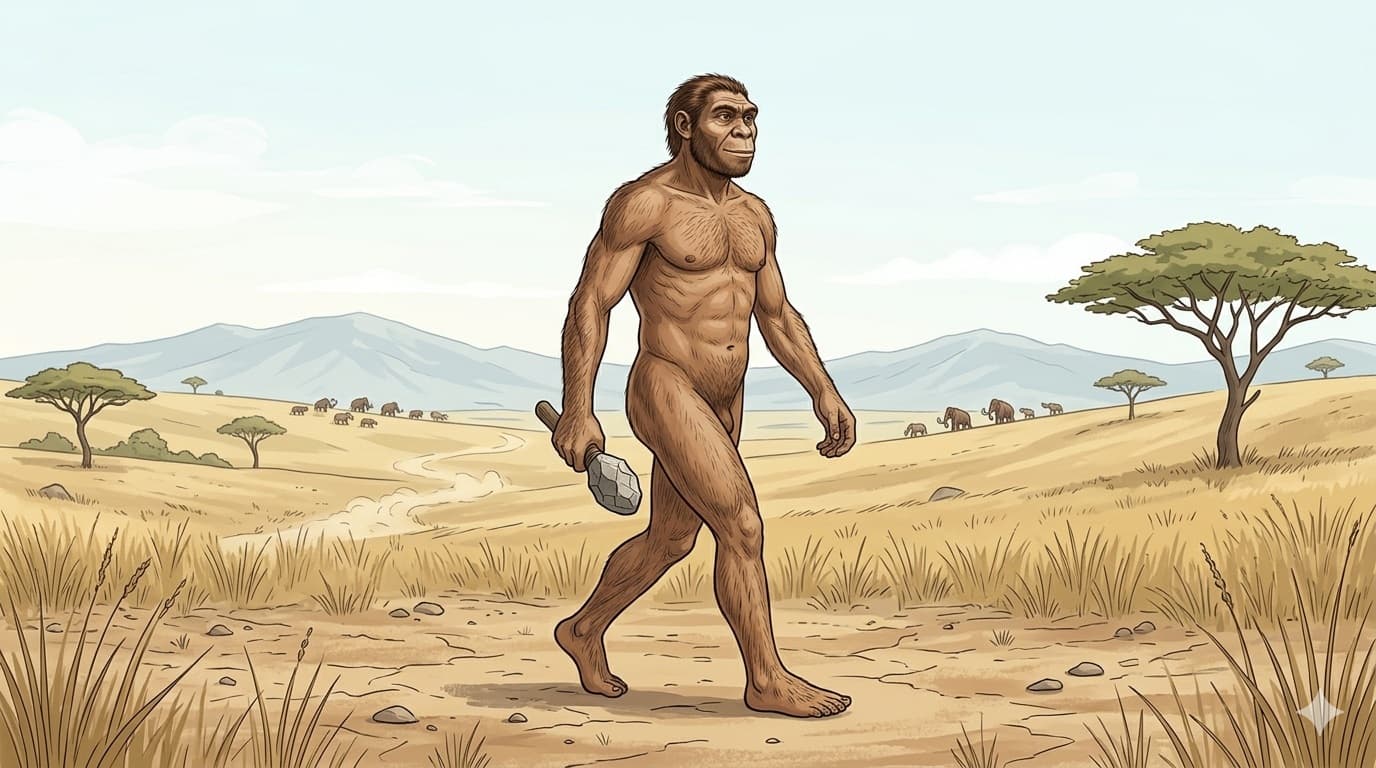
Homo erectus
Upright human
About 1.9 million years ago
Pleistocene
Homo erectus
Upright human
The first hominin to leave Africa and spread across much of the Old World, Homo erectus was a highly successful species with advanced tools and possibly the first use of fire.
Overview
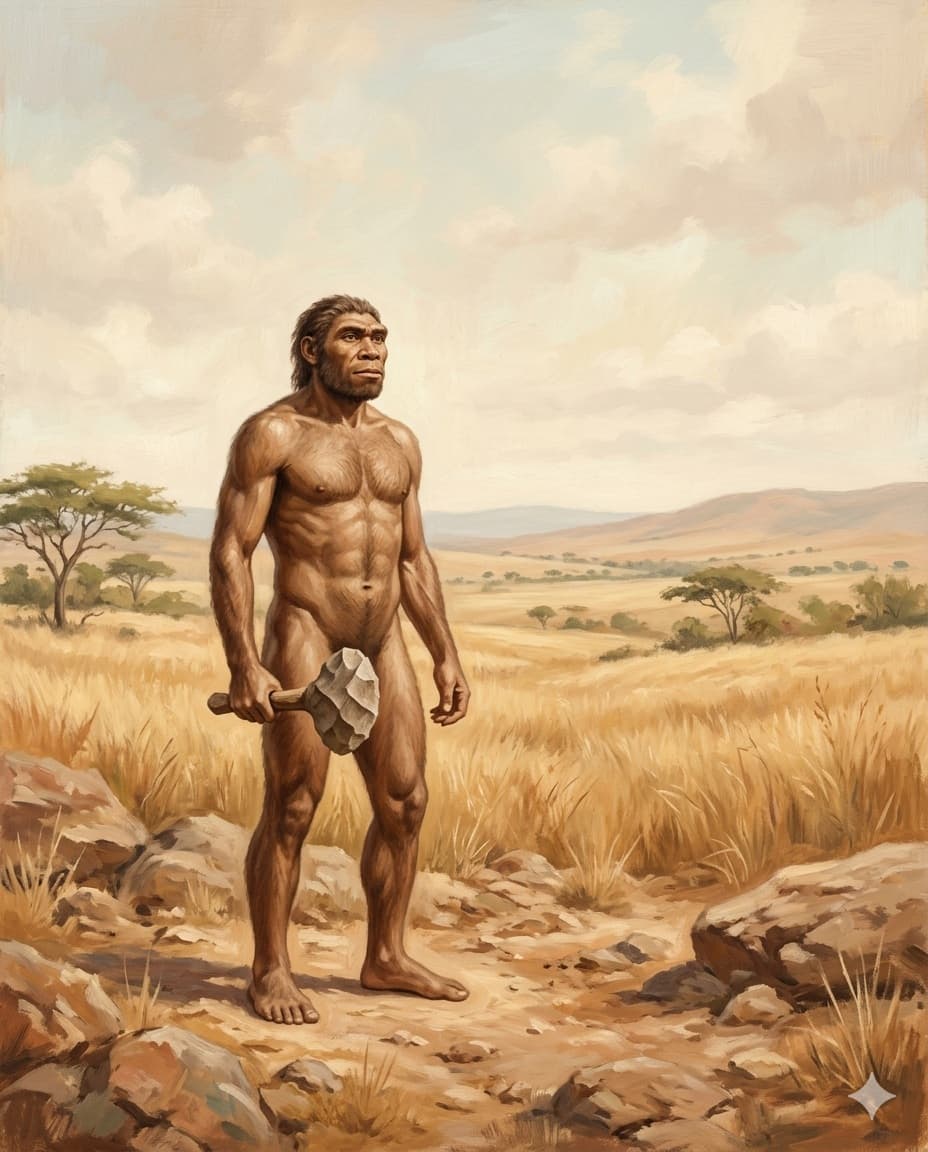
Homo erectus is one of the longest-lived and most widespread hominin species ever known, existing for nearly 2 million years and spreading from Africa across the Middle East, Asia, and possibly Europe. With a brain averaging 900–1100 cc (approaching modern human range in later populations), a fully modern body proportions, and the ability to craft Acheulean hand axes, H. erectus represents a dramatic leap in hominin capability. Evidence from sites in Georgia, China, and Indonesia shows that H. erectus had spread beyond Africa by at least 1.8 million years ago, making it the first hominin known to have dispersed across continents. Some populations may have used fire and constructed simple shelters. H. erectus is widely considered a likely ancestor of later Homo species, including Homo heidelbergensis and ultimately modern humans, though the exact relationships are still debated.
Key Traits
- Brain size of approximately 600–1100 cc — with later populations approaching modern human range
- Fully modern human body proportions — tall, long-legged, and adapted for long-distance walking
- Associated with advanced Acheulean stone tool technology
- First hominin confirmed to have spread out of Africa
- Possible use of fire, though evidence is debated for the earliest populations
- Thick brow ridges and elongated, low braincase distinguish it from modern humans
Habitat
Homo erectus occupied an extraordinary range of environments from African savannas and woodlands to the forests of Java and the steppes of central Asia. This ecological versatility was made possible by its advanced tool use, social cooperation, and potentially fire.
Diet
Highly omnivorous, including significant amounts of meat obtained through hunting and scavenging. Tubers, fruits, and other plant foods were also important. The controlled use of fire, if confirmed for early H. erectus, would have enabled cooking, increasing digestible caloric value of food.
Why This Stage Matters
Homo erectus fundamentally changed the scale of hominin existence — from a regional African species to a continental-scale presence across the Old World. Its long survival, technological sophistication, and dispersal capacity make it one of the most consequential species in human evolutionary history.
Evolutionary Context
H. erectus overlapped with and likely gave rise to Homo heidelbergensis in Africa and possibly Eurasia. Later populations of H. erectus in Southeast Asia (Java) survived until perhaps 100,000 years ago — well into the timeframe when anatomically modern humans were already present elsewhere. The species exemplifies how hominin evolution was not a single linear march but involved parallel lineages across multiple continents.
What Came Before & After


Key Sources
- Antón, S. C. (2003). Natural history of Homo erectus. Yearbook of Physical Anthropology, 46, 126–170.
- Lordkipanidze, D., et al. (2013). A complete skull from Dmanisi, Georgia, and the evolutionary biology of early Homo. Science, 342, 326–331.
Want to learn more?
Ask Dr. Elena Marsh
Have a question about Homo erectus or where it fits in the story of human evolution? Our AI expert is ready to help.
 Ask Dr. Elena Marsh