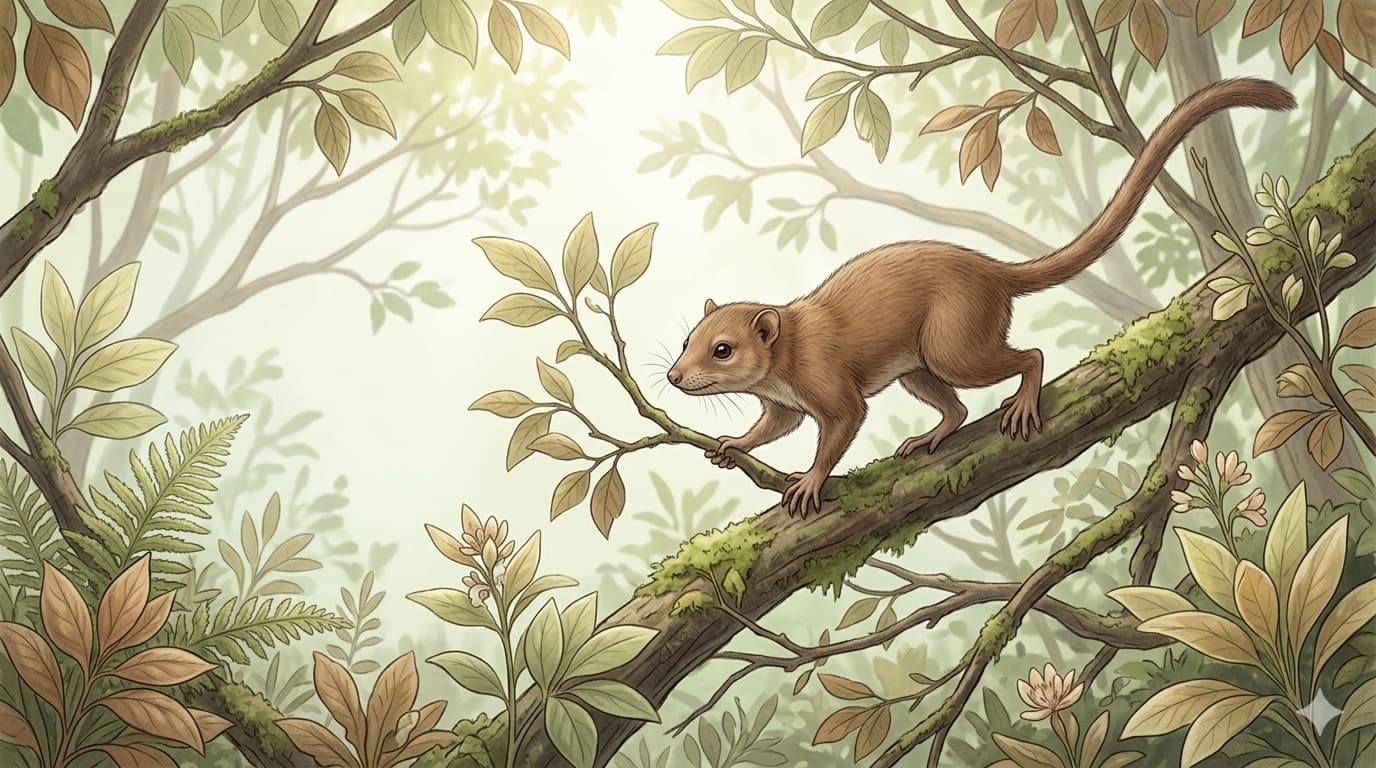
Purgatorius
Early primate-like mammal
About 66 million years ago
Paleocene
Purgatorius
Early primate-like mammal
One of the earliest known primatomorphs, Purgatorius appeared at the dawn of the Cenozoic era and may represent an early branch near the origin of the primate lineage.
Overview
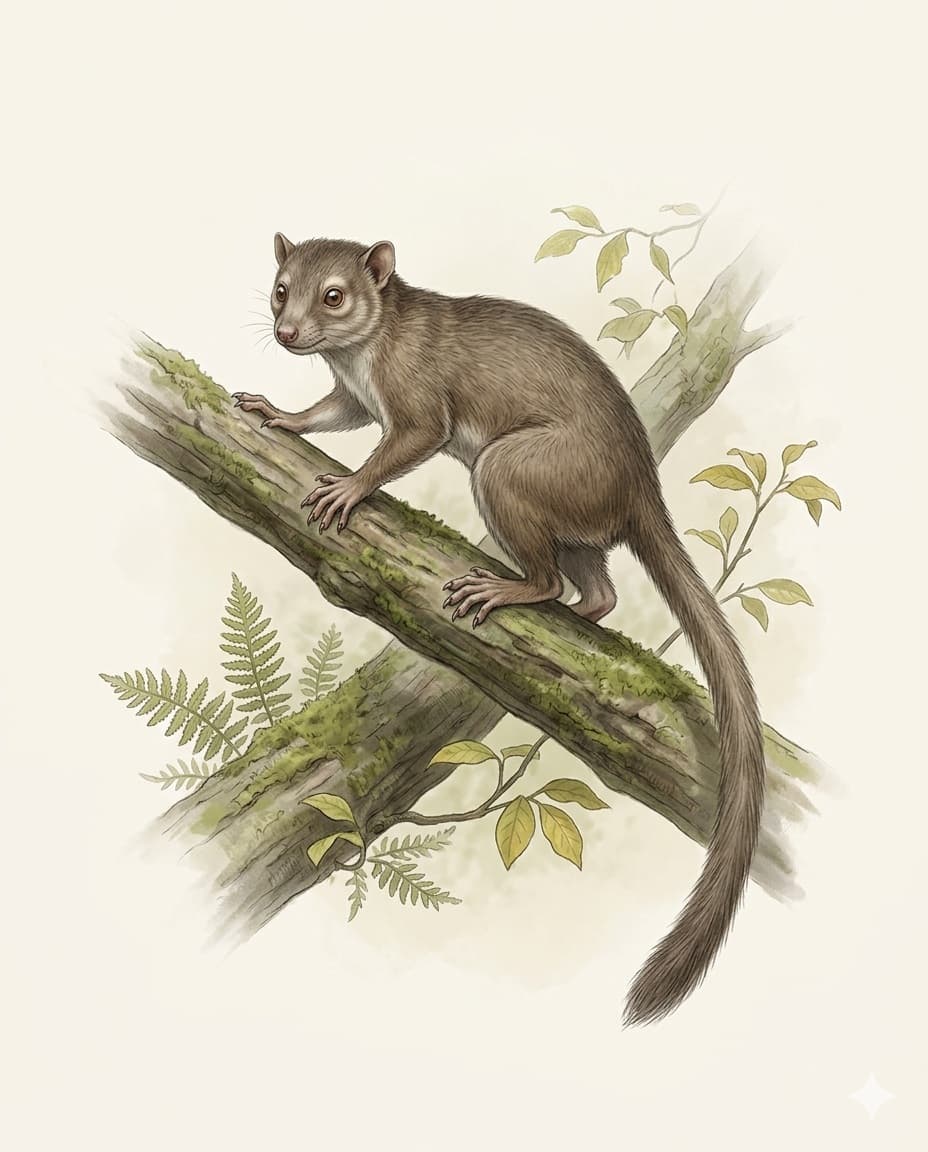
Purgatorius is one of the oldest known members of the primate stem group, appearing approximately 66 million years ago in what is now Montana, USA. It lived at the very boundary of the Cretaceous and Paleocene epochs — just after the mass extinction that ended the age of non-avian dinosaurs. With a dentition adapted for an omnivorous diet including fruit and insects, Purgatorius is considered an important early representative of the plesiadapiform group, which occupies a debated position near the origin of true primates. While scientists continue to discuss exactly how closely related plesiadapiforms are to modern primates, Purgatorius is a key fossil for understanding mammalian diversification in the Paleocene world.
Key Traits
- Small body size, estimated around 30–50 grams
- Teeth adapted for an omnivorous diet — fruits, seeds, and insects
- Early ankle bone features suggest possible arboreal tendencies
- One of the earliest known plesiadapiforms — a group related to or ancestral to primates
- Lived at the Cretaceous-Paleocene boundary, surviving or arriving just after the mass extinction
Habitat
Purgatorius inhabited the forests of what is now North America during the early Paleocene. The post-extinction world was warming and forests were expanding. Rich plant communities provided food and shelter for small, climbing mammals.
Diet
Purgatorius was likely omnivorous, consuming fruit, seeds, flowers, and insects. Its molar teeth show adaptations for crushing plant material as well as processing invertebrates.
Why This Stage Matters
Purgatorius provides critical evidence that the primate lineage was diversifying almost immediately after the end-Cretaceous extinction. It demonstrates how rapidly mammals radiated into new ecological niches once the dominance of non-avian dinosaurs ended.
Evolutionary Context
Purgatorius lived during the explosive mammalian radiation of the early Paleocene. The disappearance of non-avian dinosaurs opened enormous ecological opportunities, and small arboreal mammals like Purgatorius and its relatives diversified rapidly. Over subsequent millions of years, the primate lineage continued to evolve toward true primates with forward-facing eyes, grasping hands, and larger brains.
What Came Before & After


Key Sources
- Clemens, W. A. (1974). Purgatorius, an early paromomyid primate (Mammalia). Science, 184, 903–905.
- Chester, S. G. B., et al. (2015). Oldest known euarchontan tarsals and affinities of Paleocene Purgatorius to Primates. PNAS, 112(5), 1487–1492.
Want to learn more?
Ask Dr. Elena Marsh
Have a question about Purgatorius or where it fits in the story of human evolution? Our AI expert is ready to help.
 Ask Dr. Elena Marsh