Homo habilis
Handy man
About 2.4 million years ago
Pleistocene
Homo habilis
Handy man
The first member of the genus Homo, Homo habilis was associated with early stone tool use and marks a pivotal transition in the human evolutionary story.
Overview
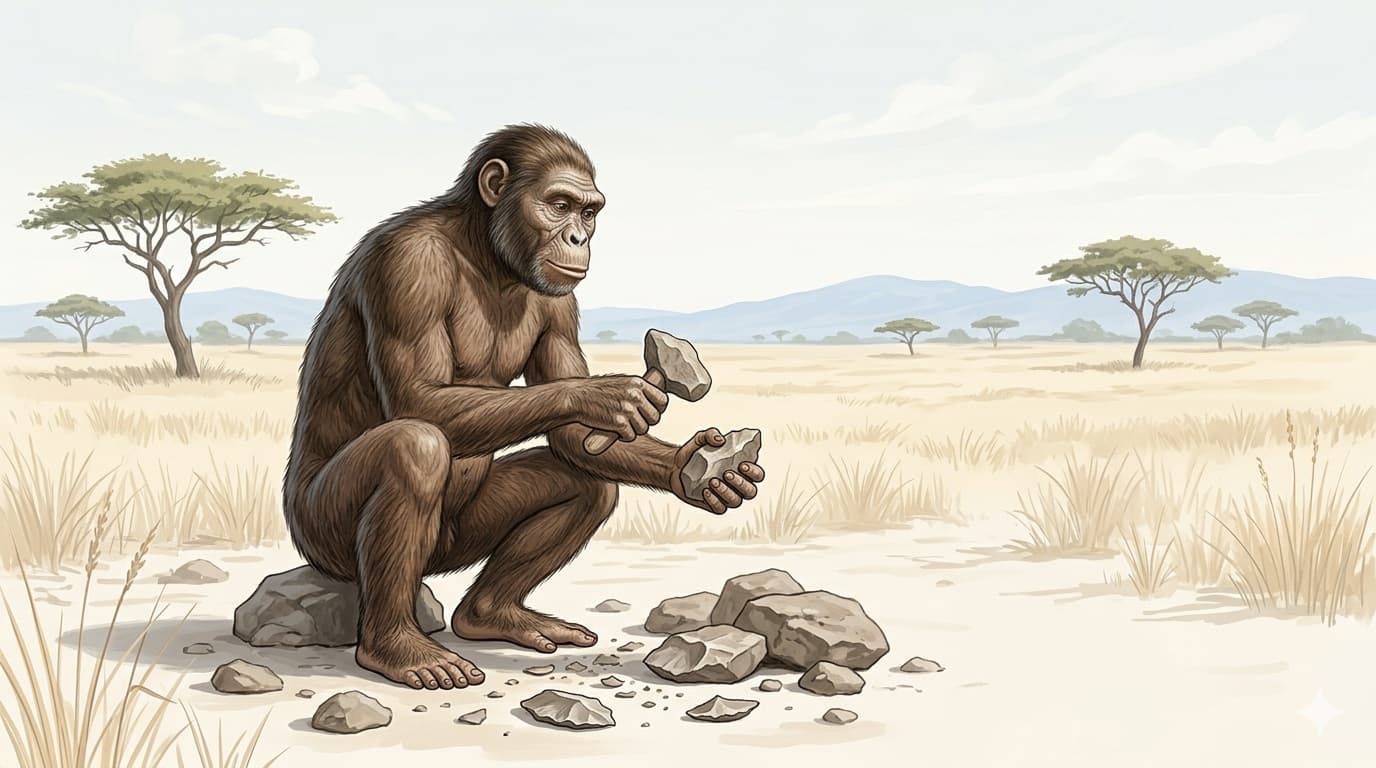
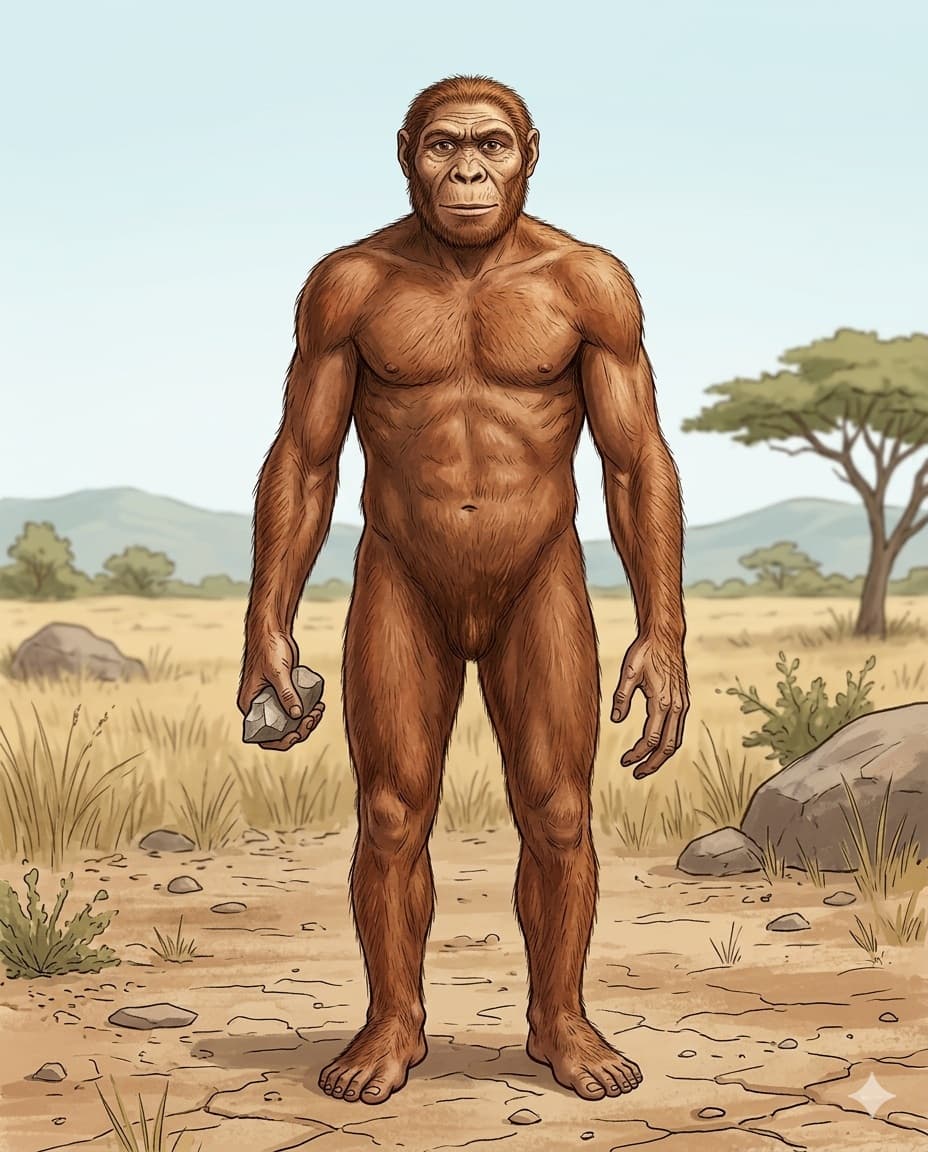
Homo habilis — 'handy man' — represents the earliest member of our own genus Homo, first appearing approximately 2.4 million years ago in East and southern Africa. Described by Louis and Mary Leakey and their colleagues in 1964, H. habilis was associated with Oldowan stone tools — the earliest known systematic stone tool tradition. These simple but effective flakes and choppers mark a new level of cognitive and technological complexity in the hominin lineage. H. habilis had a larger brain than australopithecines (approximately 550–687 cc) while still retaining several primitive features including long arms relative to body size. Its exact relationship to other early Homo species and to australopithecines is still debated, and some researchers question whether all fossils attributed to H. habilis actually belong to a single species.
Key Traits
- Brain size of approximately 550–687 cc — significantly larger than australopithecines
- Reduced facial prognathism compared to Australopithecus
- Associated with Oldowan stone tool technology
- Long arms relative to body — retained some australopithecine-like proportions
- Height approximately 100–135 cm (3.3–4.4 ft)
- Omnivorous diet with increased meat consumption inferred from tool use
Habitat
H. habilis inhabited the lake margins, river valleys, and open woodlands of East and southern Africa during the early Pleistocene. The landscape was dynamic, shifting between wetter and drier periods.
Diet
Omnivorous with a significant increase in meat and marrow consumption compared to australopithecines, facilitated by stone tool butchery. Plant foods including tubers, fruits, and seeds remained important.
Why This Stage Matters
Homo habilis marks the appearance of the genus Homo and is associated with the earliest widespread stone tool tradition. Its larger brain and tool use represent a qualitative step change in the capabilities of hominins, setting the stage for further cognitive and cultural evolution.
Evolutionary Context
H. habilis lived alongside other hominin species including robust australopithecines (Paranthropus), and may have overlapped temporally with early Homo erectus. The transition from Australopithecus to Homo represents one of the most significant adaptive shifts in human evolutionary history.
What Came Before & After


Key Sources
- Leakey, L. S. B., Tobias, P. V., & Napier, J. R. (1964). A new species of the genus Homo from Olduvai Gorge. Nature, 202, 7–9.
- Spoor, F., et al. (2015). Reconstructed Homo habilis type OH 7 suggests deep-rooted species diversity in early Homo. Nature, 519, 83–86.
Want to learn more?
Ask Dr. Elena Marsh
Have a question about Homo habilis or where it fits in the story of human evolution? Our AI expert is ready to help.
 Ask Dr. Elena Marsh