Homo sapiens
Modern human
About 300,000 years ago
Pleistocene to present
Homo sapiens
Modern human
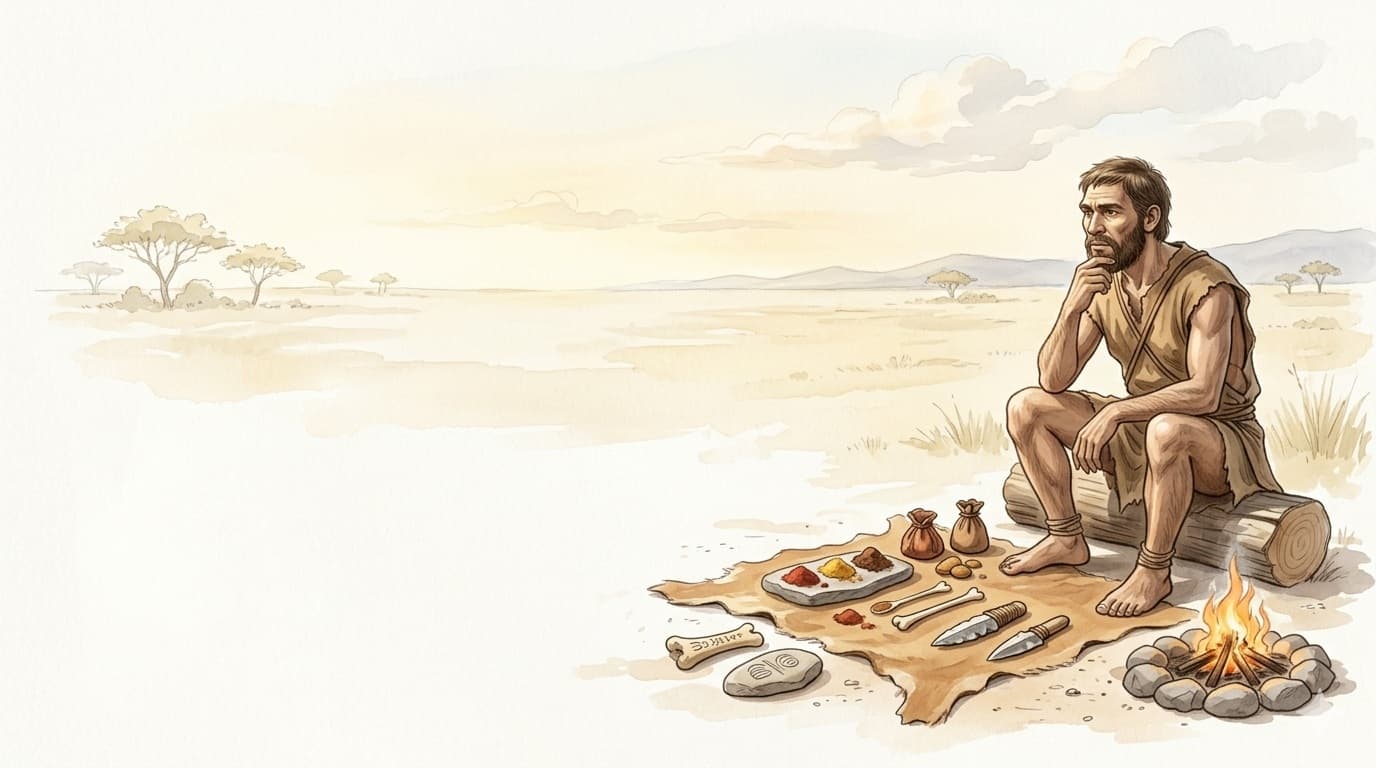
Anatomically modern humans who emerged in Africa around 300,000 years ago, developed complex language, art, and culture, and eventually spread to every corner of the planet.
Overview
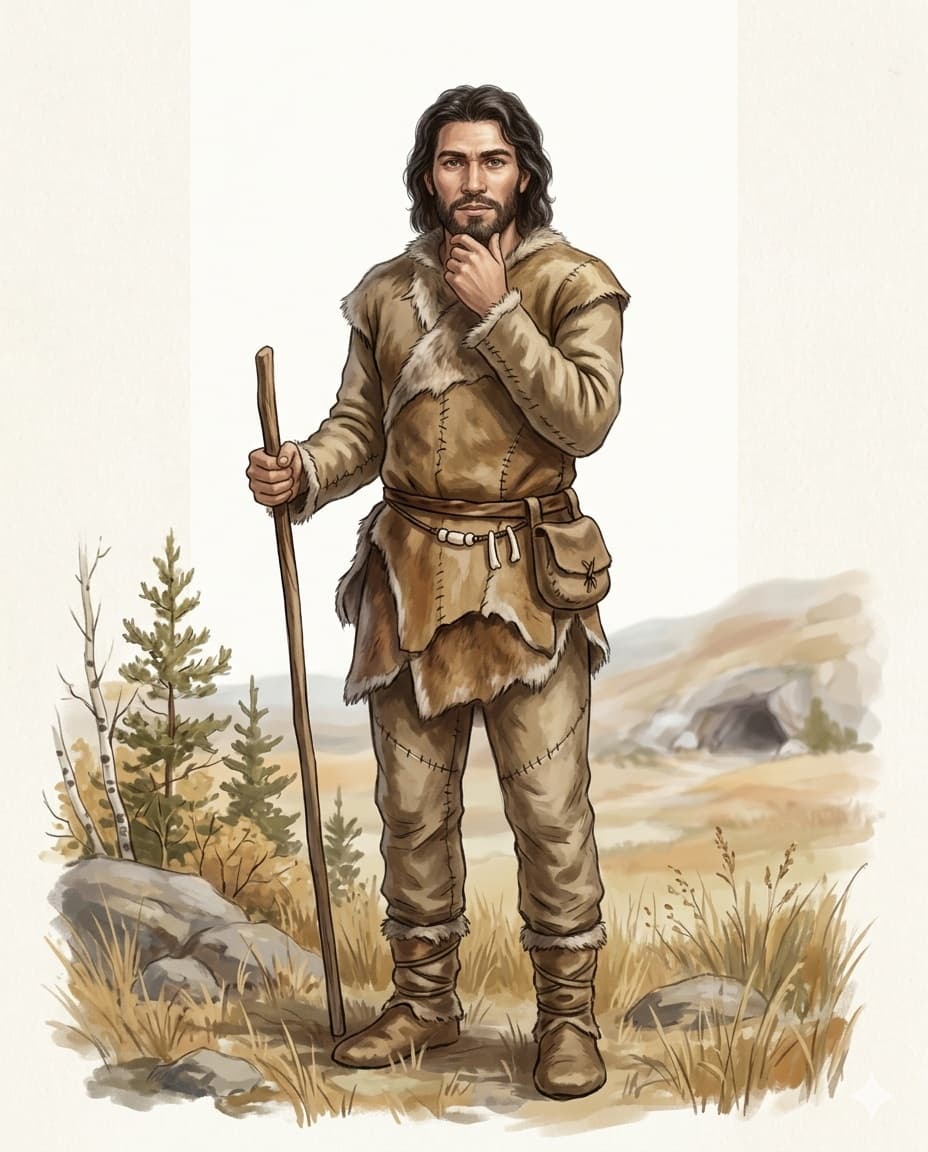
Homo sapiens — 'wise human' — is the culmination of a 160-million-year evolutionary journey that began with tiny shrew-like mammals in the Jurassic forests of China. Modern humans emerged in Africa approximately 300,000 years ago, as evidenced by fossils from Jebel Irhoud in Morocco, and spread across the entire globe over the subsequent hundreds of thousands of years. What distinguishes Homo sapiens is not just our large brain (averaging approximately 1350 cc) but the extraordinary cognitive flexibility and cultural capacity it enables. We are the only species known to have developed fully modern language, complex symbolic thought, abstract art, music, writing, science, and technology capable of reaching other planets. Our evolutionary story, however, is not one of isolation or purity: ancient DNA has revealed that modern humans interbred with Neanderthals, Denisovans, and possibly other archaic populations — meaning that today's human genome carries traces of multiple ancient lineages. The journey from Juramaia sinensis to modern Homo sapiens spans 160 million years and encompasses extraordinary biological, behavioral, and cultural transformation. Yet that journey is not a simple straight line — it is a branching, complex, and sometimes surprising story of life adapting to a changing world.
Key Traits
- Brain size averaging approximately 1350 cc — the largest relative to body size of any animal
- Fully modern skeletal anatomy: high rounded braincase, reduced brow ridges, prominent chin
- Capacity for complex language — the foundation of culture, knowledge transfer, and civilization
- Development of art, music, religion, and symbolic behavior by at least 100,000 years ago
- Sophisticated and rapidly evolving tool technologies from stone to digital
- Extraordinary geographic range: every continent and every climate zone on Earth
- Interbred with Neanderthals and Denisovans — modern humans carry 1–4% Neanderthal DNA
Habitat
Homo sapiens has inhabited every terrestrial ecosystem on Earth, from equatorial rainforests to arctic tundra, high-altitude plateaus to coastal island chains. This ecological versatility — enabled by culture, clothing, and food technology — is unmatched in the history of life.
Diet
Omnivorous with extraordinary dietary breadth. Modern humans consume a greater variety of foods than any other primate, including cooked and processed foods that dramatically increase caloric availability. Diet varies enormously by geography and culture, from nearly pure marine diets in Arctic populations to highly plant-based diets elsewhere.
Why This Stage Matters
Homo sapiens is not only the endpoint of this educational evolutionary sequence but also the species responsible for studying that sequence. Our capacity for science, writing, and cumulative knowledge transmission allows us to reconstruct 160 million years of evolutionary history from fossil bones, ancient DNA, and comparative anatomy. This self-reflective capability — understanding our own origins — is itself a remarkable product of the evolutionary process.
Evolutionary Context
Modern humans emerged from African populations of Homo heidelbergensis and initially coexisted with Neanderthals in Europe and western Asia, and with Denisovans in central and eastern Asia. By approximately 40,000 years ago, modern humans were the sole surviving hominin lineage. The rapid global spread of Homo sapiens and the development of complex civilizations over the past 10,000 years represent an unprecedented acceleration of adaptive change — cultural rather than biological in nature. This final stage does not represent the 'goal' of evolution. Evolution has no goal. Rather, it represents the present chapter in an ongoing story — one that began with small, nocturnal mammals surviving in the shadow of dinosaurs and has led, through countless branches, extinctions, and transformations, to the species writing and reading these words today.
What Came Before & After

Previous stage
Homo heidelbergensis
Archaic human
Key Sources
- Hublin, J.-J., et al. (2017). New fossils from Jebel Irhoud, Morocco and the pan-African origin of Homo sapiens. Nature, 546, 289–292.
- Reich, D. (2018). Who We Are and How We Got Here: Ancient DNA and the New Science of the Human Past. Pantheon Books.
- Stringer, C., & Andrews, P. (2011). The Complete World of Human Evolution. Thames & Hudson.
Want to learn more?
Ask Dr. Elena Marsh
Have a question about Homo sapiens or where it fits in the story of human evolution? Our AI expert is ready to help.
 Ask Dr. Elena Marsh