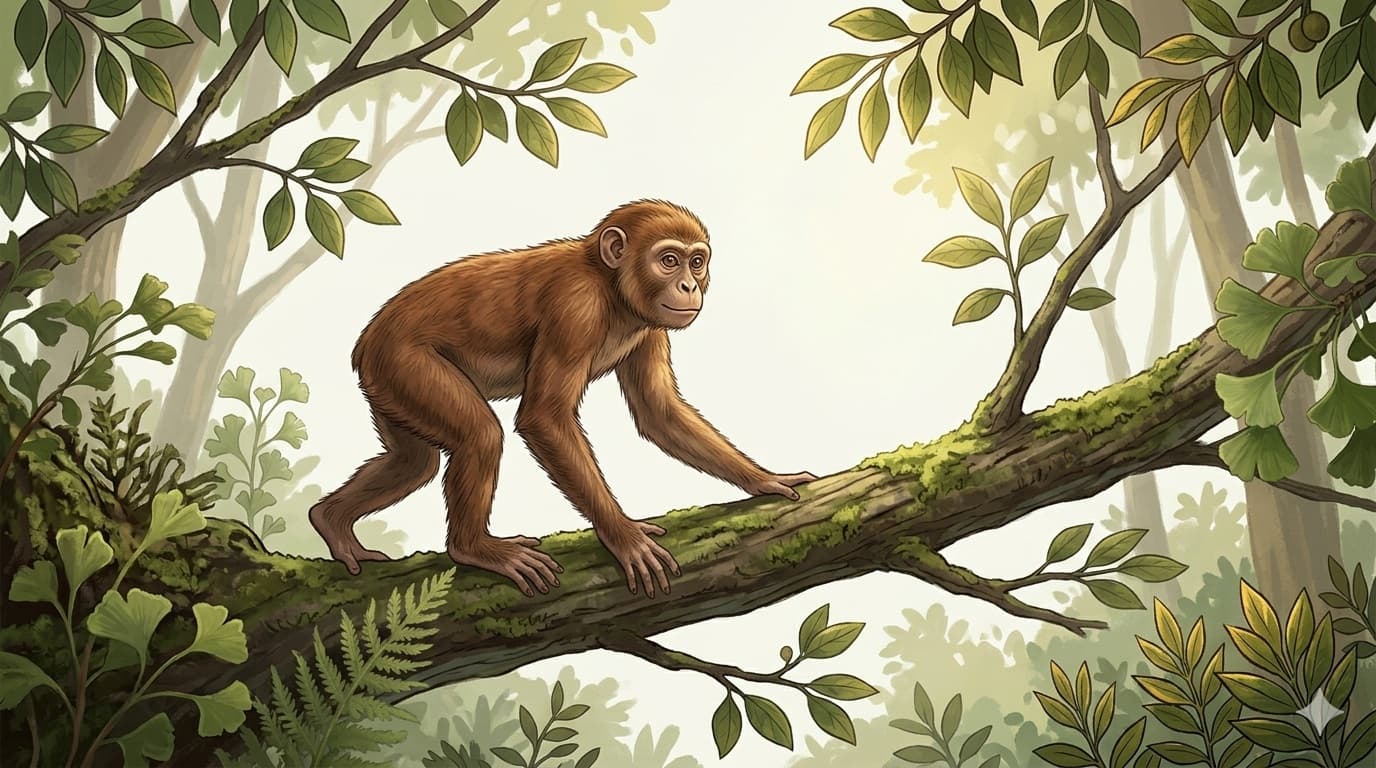
Proconsul
Early ape
About 21 million years ago
Miocene
Proconsul
Early ape
An early Miocene ape from East Africa that lacked a tail and possessed a combination of monkey and ape features, representing a pivotal stage in ape evolution.
Overview
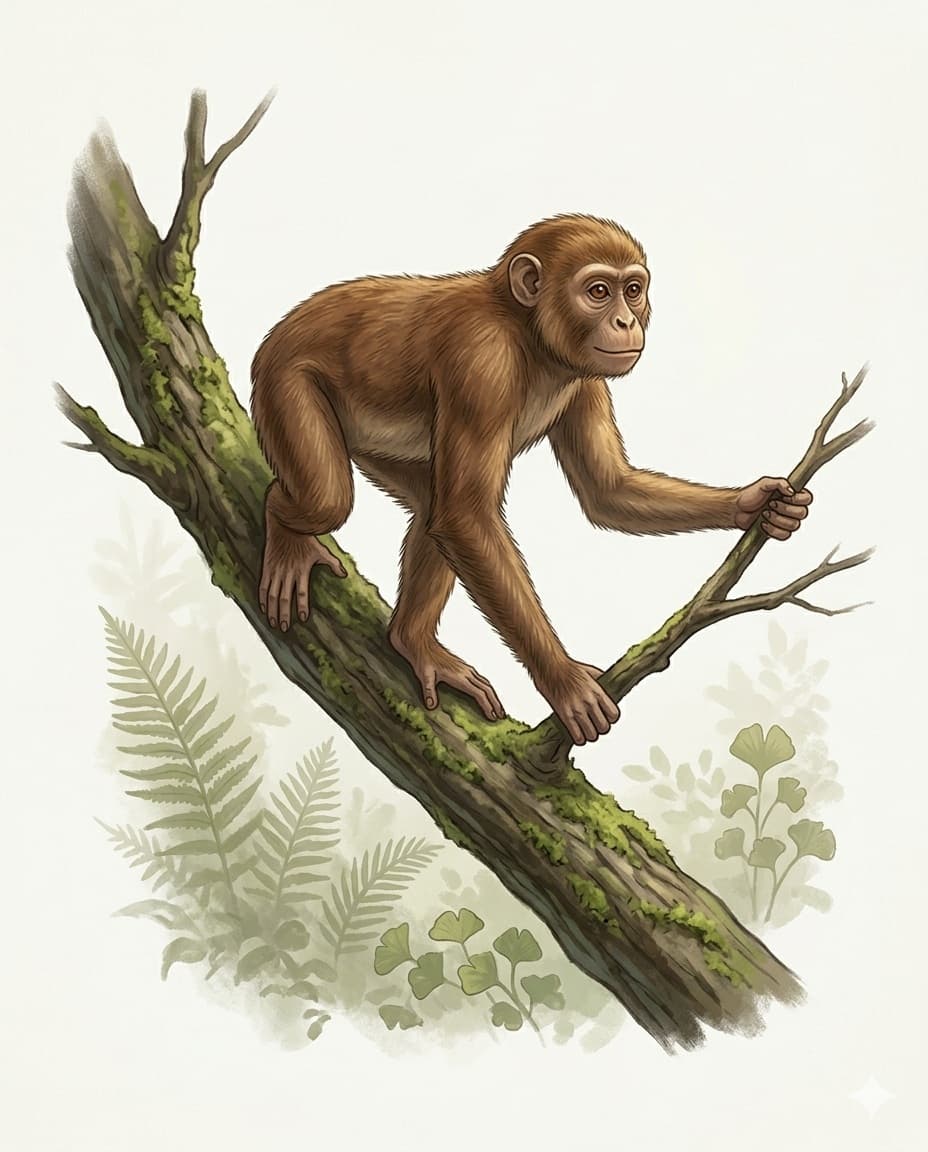
Proconsul is one of the best-known early apes, living approximately 21 million years ago in the forests of East Africa. Unlike modern apes, Proconsul lacked many of the specialized features seen in living great apes — it had no tail, but also lacked the broad chest and shoulder adaptations for brachiation (arm-swinging) seen in modern apes. This makes Proconsul a fascinating 'transitional' form, displaying a combination of primitive and derived features that help paleontologists understand the early evolution of the ape body plan. Several species of Proconsul are known, ranging from cat-sized to chimpanzee-sized individuals. While Proconsul is not confirmed as a direct human ancestor, it sits near the base of the ape radiation that eventually gave rise to gibbons, orangutans, gorillas, chimpanzees, and humans.
Key Traits
- No tail — a key distinguishing feature of apes
- Flexible wrists and mobile limbs suited for above-branch locomotion
- Lacked the broad chest and wrist-locking adaptations of modern great apes
- Multiple species ranged from approximately 10 kg to over 50 kg in body mass
- Large brain relative to body size compared to earlier primates
- Frugivorous diet with large molar teeth for hard food processing
Habitat
Proconsul inhabited the tropical and subtropical forests of East Africa (primarily present-day Kenya and Uganda) during the early to middle Miocene. The African continent was drifting northward, and forests were widespread before later climate cooling reduced forest cover.
Diet
Largely frugivorous, but capable of consuming harder food items including seeds and fibrous vegetation based on its dental morphology.
Why This Stage Matters
Proconsul's exceptional fossil record — including complete skulls, postcranial bones, and even associated skeletal material — makes it one of the most informative early apes in the fossil record. It reveals that apes originated in Africa and that the earliest apes possessed a locomotor style distinct from both living monkeys and living apes.
Evolutionary Context
The Miocene epoch (23–5 million years ago) was the 'golden age of apes,' during which dozens of ape species evolved and spread across Africa, Europe, and Asia. Proconsul represents an early phase of this radiation. Later Miocene apes would eventually give rise to the lineages leading to modern great apes and, eventually, to hominins including our own species.
What Came Before & After


Key Sources
- Walker, A., & Teaford, M. (1989). The hunt for Proconsul. Scientific American, 260(1), 76–82.
- Fleagle, J. G. (2013). Primate Adaptation and Evolution, 3rd ed. Academic Press.
Want to learn more?
Ask Dr. Elena Marsh
Have a question about Proconsul or where it fits in the story of human evolution? Our AI expert is ready to help.
 Ask Dr. Elena Marsh